


The Prolinnova Oversight Group (POG) serves as governance mechanism to ensure accountability of the Global Partnership Platform (GPP) to the Country Platforms (CPs), their constituencies and donors. The POG is made up of four people from the CPs, one from the International Support Team (IST) and four independent members. Since its inaugural meeting in 2005 in South Africa, it meets face-to-face at least once a year and otherwise communicates by email and Zoom. It has drawn up several policies and guidelines for the GPP. The Terms of Reference (English / French) for the POG were originally drawn up by Prolinnova partners at their first meeting in Yirgalem, Ethiopia in March 2004 and have been revised periodically by the POG on the basis of experience.
Le groupe de supervision de Prolinnova (POG) sert de mécanisme de gouvernance pour assurer la responsabilité de la plateforme de partenariat mondial (GPP) vis-à-vis des plateformes pays (PPs), de leurs constituants et des donateurs. Le POG est composé de quatre personnes issues des plateformes nationales, d’un membre de l’équipe internationale d’appui (EIA) et de quatre membres indépendants. Depuis sa réunion inaugurale en 2005 en Afrique du Sud, il se réunit en face à face au moins une fois par an et communique par courrier électronique et Zoom. Il a élaboré plusieurs politiques et lignes directrices pour le GPP. Les termes de référence du POG ont été élaborés à l’origine par les partenaires de Prolinnova lors de leur première réunion à Yirgalem, en Éthiopie, en mars 2004, et ont été révisés périodiquement par le POG sur la base de l’expérience acquise.
 Basanta Rana Bhat is an ecologist working with the Institute for Social and Environmental Research in Kathmandu, Nepal. He has an MSc in Agriculture (Conservation Ecology) from Tribhuvan University in Chitwan, Nepal. He has been an active member of Prolinnova–Nepal since 2008. He is a skilled trainer of participatory innovation development (PID) and brought out a PID training manual in Nepali. He is Executive Board Member of the Nepal Permaculture Group, chairs the Organic Association of Nepal and has worked extensively in the NGO and private sector in the field of organic agriculture and certification of organic products. In the POG, he represents the CPs in Asia.
Basanta Rana Bhat est un écologiste qui travaille à l’Institut de recherche sociale et environnementale de Katmandou, au Népal. Il est titulaire d’un master en agriculture (écologie de la conservation) de l’université de Tribhuvan à Chitwan, au Népal. Il est un membre actif de Prolinnova–Népal depuis 2008. Il est un formateur compétent en matière de développement participatif de l’innovation (DPI) et a publié un manuel de formation DPI en népalais. Il est membre du conseil d’administration du Nepal Permaculture Group, préside l’Organic Association of Nepal et a beaucoup travaillé avec les ONGs et le secteur privé dans le domaine de l’agriculture biologique et de la certification des produits biologiques. Au sein du POG, il représente les PPs en Asie.
 Birgit Habermann is a development ecologist working with the International Livestock Research Institute (ILRI), based in Nairobi, Kenya. She has MSc degrees in ecology (Vienna University) and agroforestry (Bangor University) as well as a PhD in Development Studies (University of Sussex). She has been working on social issues and Participatory Action Research in agriculture and forestry since 2000, and has experience in Pakistan, Kyrgyzstan, Thailand, Eastern Africa and Europe. She joined ILRI in March 2019, where she is engaged in transdisciplinary research on farmer-led innovation and learning for adaptation to climate change. She is specifically investigating innovation by livestock keepers to understand how science can best complement their work in adapting to their changing environment. She currently serves as co-chair of the POG.
Birgit Habermann (b.habermann@cgiar.org) est une écologiste du développement qui travaille à l’Institut international de recherche sur l’élevage (ILRI), à Nairobi, au Kenya. Elle est titulaire d’une maîtrise en écologie (Université de Vienne) et en agroforesterie (Université de Bangor), ainsi que d’un doctorat en études du développement (Université du Sussex). Elle travaille sur les questions sociales et la recherche-action participative en agriculture et en foresterie depuis 2000, et a de l’expérience au Pakistan, au Kirghizistan, en Thaïlande, en Afrique de l’Est et en Europe. Elle a rejoint l’ILRI en mars 2019, où elle est engagée dans une recherche transdisciplinaire sur l’innovation et l’apprentissage menés par les agriculteurs pour l’adaptation au changement climatique. Elle étudie spécifiquement l’innovation des éleveurs pour comprendre comment la science peut compléter au mieux leur travail d’adaptation à leur environnement changeant. Elle est actuellement coprésidente du POG.
 Brigid Letty is an agricultural development specialist and principle scientist with the Institute of Natural Resources (INR) in Pietermaritzburg, South Africa (SA). She has a BSc in Agriculture (Animal Science), an MSc in range & forage science and a PhD in agroforestry systems from University of KwaZulu-Natal (KZN). Up to 2003, she worked for six years in the Farming Systems Research Section of KZN Department of Agriculture. With INR, she analyses and facilitates multistakeholder innovation processes in small-scale farming. She coordinated Prolinnova’s multi-CP project HAPID, focused on local innovation and PID in the face of HIV/AIDS; and the action research in SA in the European Union project JOLISAA (Joint Learning in Innovation Systems in African Agriculture). She was previously an elected POG member representing CPs in anglophone Africa and played a key role in developing strategy documents for the network for 2011–15 and 2016–20. She is Prolinnova–SA coordinator since 2005. She led the Prolinnova taskforce in Eastern & Southern Africa (ESA) until she became interim Subregional Coordinator (SRC) in ESA in 2019–20. After a new SRC was selected, Brigid agreed to remain in the IST.
Brigid Letty (bletty@inr.org.za) est spécialiste du développement agricole et chercheuse principale à l’Institut des ressources naturelles (INR) de Pietermaritzburg, en Afrique du Sud. Elle est titulaire d’une licence en agriculture (sciences animales), d’une maîtrise en sciences des pâturages et des fourrages et d’un doctorat en systèmes agroforestiers de l’université de KwaZulu-Natal (KZN). De 1997 à 2003, elle a travaillé dans la section de recherche sur les systèmes agricoles du ministère de l’agriculture du KZN. Avec l’INR, elle analyse et facilite les processus d’innovation multipartites dans l’agriculture à petite échelle. Brigid a coordonné le projet multi-PP HAPID de Prolinnova, axé sur l’innovation locale et le DPI face au VIH/SIDA, ainsi que la recherche-action en Afrique du Sud dans le cadre du projet JOLISAA (Joint Learning in Innovation Systems in African Agriculture/Apprentissage conjoint des systèmes d’innovation dans l’agriculture africaine) de l’Union européenne. Elle était auparavant un membre élu du POG représentant les PPs d’Afrique anglophone et a joué un rôle clé dans l’élaboration des documents stratégiques du réseau pour 2011–15 et 2016–20. Elle est coordinatrice de Prolinnova–SA depuis 2005. Elle a dirigé la taskforce Prolinnova en Afrique orientale et australe (AOA) jusqu’à ce qu’elle devienne coordinatrice sous-régionale (CSR) intérimaire en AOA en 2019–20. Après la sélection d’un nouveau CSR, Brigid a accepté de rester dans l’EIA.
 Ernest Letsoalo is a specialist in agricultural advisory services who works as a lecturer at the University of Venda in Limpopo Province, South Africa. He has a Master’s degree in Agricultural Extension from the University of Limpopo and a Master of Philosophy in Science and Technology with focus on Agricultural Knowledge Production and Utilization from Stellenbosch University. For many years, he coordinated the Centre for Rural Community Empowerment at the University of Limpopo. Ernest has been with Prolinnova since the International Partners Workshop in Ethiopia in 2004. He has integrated the PID approach into his teaching related to agricultural advisory services and science communication at both under- and postgraduate level, with students co-investigating and co-documenting local innovations and experiments together with local communities. In the POG, Ernest represents the CPs in Eastern & Southern Africa.
Ernest Letsoalo (ernest.letsoalo@univen.ac.za) est un spécialiste des conseils agricoles qui enseigne à l’Université de Venda dans la province de Limpopo, en Afrique du Sud. Il est titulaire d’une maîtrise en vulgarisation agricole de l’Université de Limpopo et d’une maîtrise de philosophie en science et technologie, axée sur la production et l’utilisation des connaissances agricoles, de l’Université de Stellenbosch. Pendant de nombreuses années, il a coordonné le Centre for Rural Community Empowerment (Centre pour l’autonomisation des communautés rurales) à l’Université de Limpopo. Ernest travaille pour Prolinnova depuis l’atelier international des partenaires en Éthiopie en 2004. Il a intégré l’approche DPI dans son enseignement relatif aux conseils agricoles et à la communication scientifique, tant au niveau du premier que du deuxième cycle, les étudiants participant à l’investigation et à la documentation des innovations et expériences locales en collaboration avec les communautés locales. Au sein du POG, Ernest représente les PPs en AOA.
 Franklin Avornyo is an animal nutritionist in the Animal Research Institute (ARI) of the Council for Scientific and Industrial Research (CSIR) in Ghana. He is the National Deputy Director of CSIR-ARI, based in Accra. He has a BSc degree in Agriculture (Animal Science) from the University of Ghana, an MSc in Sustainable Agriculture from the University of London and a PhD in Ruminant Nutrition from the University of Cambridge, UK. He has many years’ experience in development-oriented research in animal nutrition, livestock value chains, ethnoveterinary medicine, sustainable agriculture and integrated crop-livestock farming systems. He served in the National Steering Committee (NSC) of the Prolinnova–Ghana platform for many years and has been an active member of the CP for over 15 years, having facilitated and documented processes of participatory research with farmers designed to enhance local capacity to innovate for food and nutrition security. He also played an important role in piloting Local Innovation Support Funds for farmer-led research and innovation and developed scenarios for upscaling this approach to decentralised funding of agricultural research in development.
Franklin Avornyo (favornyo@yahoo.com) est spécialiste de la nutrition animale à l’Institut de recherche animale (ARI) du Conseil de la recherche scientifique et industrielle (CSIR) au Ghana. Il est directeur national adjoint du CSIR-ARI, basé à Accra. Il est titulaire d’une licence en agriculture (sciences animales) de l’université du Ghana, d’une maîtrise en agriculture durable de l’université de Londres et d’un doctorat en nutrition des ruminants de l’université de Cambridge, au Royaume-Uni. Depuis de nombreuses années, il mène des recherches axées sur le développement dans les domaines de la nutrition animale, des chaînes de valeur de l’élevage, de la médecine ethnovétérinaire, de l’agriculture durable et des systèmes agricoles intégrés culture-élevage. Il a fait partie du Comité National de Pilotage (CNP) de Prolinnova–Ghana pendant de nombreuses années et a été un membre actif de la PP pendant plus de 15 ans, ayant facilité et documenté des processus de recherche participative avec des agriculteurs conçus pour renforcer la capacité locale à innover pour la sécurité alimentaire et nutritionnelle. Il a également joué un rôle important dans le pilotage des fonds d’appui à l’innovation locale pour la recherche et l’innovation menées par les paysans et dans l’élaboration de scénarios visant à étendre cette approche au financement décentralisé de la recherche agricole pour le développement.
 Jony Jos is a small-scale farmer from Tripunithura in Kerala State, India. He has long specialised in cultivating paddy, bananas and vegetables. He graduated in agriculture with a specialisation in horticulture from Allahabad Agricultural Institute, Allahabad University, and then worked as agricultural officer with the Kerala Department of Agriculture. He gained a Postgraduate Diploma in Personnel Management & Agri-Warehouse Management and received a State-level award for E-Governance in Service Delivery from the Institute of Management in Government (IMG) for E-enabling paddy procurement and distribution. After retiring, he became a full-time farmer. His farming techniques have been strongly influenced by the principles advocated in the Low-External-Input and Sustainable Agriculture (LEISA) magazine published in India, and he is committed to the collaborative development of agricultural technologies involving multiple stakeholders. He is an active member of Nellulpadaka Samithy, a collective of paddy farmers, and a volunteer advisor to various farmer groups and NGOs, especially regarding the paddy-to-rice value chain. Jony’s experience as a small-scale farmer, combined with his past role in government service, positions him well to contribute to the POG from both perspectives.
Jony Jos (jonyjos@gmail.com) est un paysan de Tripunithura, dans l’État du Kerala, en Inde. Il s’est longtemps spécialisé dans la culture du riz, des bananes et des légumes. Il est diplômé en agriculture avec une spécialisation en horticulture de l’Institut agricole d’Allahabad, Université d’Allahabad, et a ensuite travaillé en tant qu’agent agricole pour le Département de l’agriculture du Kerala. Il a obtenu un diplôme d’études supérieures en gestion du personnel et en gestion d’entrepôts agricoles et a reçu un prix au niveau de l’État pour la gouvernance électronique dans la prestation de services, décerné par l’Institute of Management in Government (IMG), pour avoir permis l’achat et la distribution de paddy par voie électronique. Après avoir pris sa retraite, il est devenu agriculteur à plein temps. Ses techniques agricoles ont été fortement influencées par les principes préconisés dans le magazine LEISA (Low-External-Input and Sustainable Agriculture) publié en Inde, et il s’est engagé dans le développement collaboratif de technologies agricoles impliquant de multiples parties prenantes. Il est un membre actif de Nellulpadaka Samithy, un collectif de producteurs de riz, et un conseiller bénévole pour divers groupes de paysans et ONGs, en particulier en ce qui concerne la chaîne de valeur du riz. L’expérience de Jony en tant que paysan, combinée à son rôle passé dans le service public, le place en bonne position pour contribuer au POG sous ces deux angles.
 Mutizwa Mukute is an international consultant based in Zimbabwe. He has a PhD in Environmental Education from Rhodes University. His doctoral research focused on farmer innovation, particularly the farmer-developed Machobane Farming System. As a consultant, he facilitates environmental education, transformative learning, developmental evaluation and organisational development. He is member of the Adaptation Fund Technical Evaluation Reference Group (AF-TERG), Senior Research Associate of Rhodes University Department of Education. Mutizwa’s involvement with Prolinnova started in 2000, when he was a member of the CGIAR NGO Committee and co-developed the Prolinnova concept. He has subsequently participated in the network in many ways, most notably by facilitating development-oriented evaluation and as a Friend of Prolinnova. He is as an independent member of the POG and is currently a co-chair.
Mutizwa Mukute (mmukute@gmail.com) est un consultant international basé au Zimbabwe. Il est titulaire d’un doctorat en éducation environnementale de l’Université de Rhodes. Ses recherches doctorales ont porté sur l’innovation agricole, en particulier sur le système agricole Machobane développé par un agriculteur. En tant que consultant, il facilite l’éducation environnementale, l’apprentissage transformatif, l’évaluation du développement et le développement organisationnel. Il est membre du groupe de référence pour l’évaluation technique du Fonds d’adaptation (AF-TERG) et associé de recherche principal du département de l’éducation de l’Université de Rhodes. L’implication de Mutizwa dans Prolinnova a commencé en 2000, lorsqu’il était membre du comité des ONGs du CGIAR et qu’il a co-développé le concept de Prolinnova. Par la suite, il a participé au réseau de nombreuses manières, notamment en facilitant l’évaluation axée sur le développement et en tant qu’Ami de Prolinnova. Il est membre indépendant du POG et est actuellement coprésidente.
 Peter Gubbels, a Canadian living in Canada and northern Ghana, is Director for Action Learning and Advocacy for West Africa with Groundswell International, a global partnership that strengthens rural communities to build healthy farming and food systems. He has many years’ experience in rural development, including three decades living and working in West Africa. Peter provides support to action research and advocacy activities of Groundswell West Africa’s network members to build equitable and ecologically sound local economies and to engage in wider coalitions for transforming farming and food systems through agroecology. He represents Groundswell West Africa in various networks and alliances, including Alliance for Food Sovereignty in Africa (AFSA), Alliance for Agroecology in West Africa (3AO), Global Evergreening Alliance (GEA), Global Resilience Partnership (GRP) and the 4 per 1000 soil initiative. He was raised on a farm in Ontario and has a college diploma in Agricultural Production & Management, a BA Honours degree in History (University of Western Ontario) and a Masters in Rural Development (University of East Anglia, UK). Before co-founding Groundswell, Peter was World Neighbors’ Vice President of International Programs. He has authored or co-authored numerous publications, articles & opinion pieces.
Peter Gubbels (pgubbels@groundswellinternational.org), Canadien vivant au Canada et dans le nord du Ghana, est directeur de l’apprentissage par l’action et du plaidoyer pour l’Afrique de l’Ouest chez Groundswell International, un partenariat mondial qui renforce les communautés rurales afin de mettre en place des systèmes agricoles et alimentaires sains. Il a de nombreuses années d’expérience dans le domaine du développement rural, dont trois décennies passées à vivre et à travailler en Afrique de l’Ouest. Peter soutient les activités de recherche-action et de plaidoyer des membres du réseau Groundswell Afrique de l’Ouest afin de construire des économies locales équitables et écologiquement saines et de s’engager dans des coalitions plus larges pour transformer les systèmes agricoles et alimentaires grâce à l’agroécologie. Il représente Groundswell Afrique de l’Ouest dans divers réseaux et alliances, notamment l’Alliance pour la souveraineté alimentaire en Afrique (AFSA), l’Alliance pour l’agroécologie en Afrique de l’Ouest (3AO), l’Alliance mondiale pour le reverdissement (GEA), le Partenariat pour la résilience mondiale (GRP) et l’initiative 4 pour 1000 sols. Il a grandi dans une ferme de l’Ontario et est titulaire d’un diplôme universitaire en production et gestion agricoles, d’une licence en histoire (Université de Western Ontario) et d’un master en développement rural (Université d’East Anglia, Royaume-Uni). Avant de cofonder Groundswell, Peter était vice-président des programmes internationaux de World Neighbors. Il est l’auteur ou le co-auteur de nombreuses publications, d’articles et de textes d’opinion.
 Peter Taylor is the Director at the Institute of Development Studies (IDS). Previously he was Director, Strategic Development, at the International Development Research Centre (IDRC), Ottawa, Canada, where he was responsible for leading IDRC’s strategic planning processes. During his ten years with IDRC, he also served as Acting Director of IDRC’s Inclusive Economies Program Area, and as Associate Director for the Think Tank Initiative, a ten-year, multipartner programme that supports strengthening of policy research organisations in Africa, South Asia and Latin America. Peter has more than 30 years’ experience in international development. He also worked at IDS as a Research Fellow, Head of Graduate Studies and Leader of the Participation, Power and Social Change Team; as Education Technical Advisor with the Swiss NGO Helvetas in Vietnam; as Lecturer in Agricultural Education at the Agricultural Extension and Rural Development Department at the University of Reading, UK; and as Head of the Agriculture Department in a rural secondary school in northern Botswana. Peter holds a PhD and an MSc in agricultural education, and a BSc degree in animal sciences. He has research, teaching and writing interests in the theory and practice of organisational development and capacity strengthening, evaluation and learning, and facilitation of participatory and social change processes in a diverse range of international contexts.
Peter Taylor est directeur de l’Institut d’études du développement (IDS). Auparavant, il était directeur du développement stratégique au Centre de recherches pour le développement international (CRDI) à Ottawa, au Canada, où il était chargé de diriger les processus de planification stratégique du CRDI. Au cours de ses dix années au CRDI, il a également occupé les fonctions de directeur par intérim du programme Économies inclusives du CRDI et de directeur associé de l’Initiative Think Tank, un programme multipartenarial d’une durée de dix ans qui soutient le renforcement des organismes de recherche sur les politiques en Afrique, en Asie du Sud et en Amérique latine. Peter a plus de 30 ans d’expérience dans le domaine du développement international. Il a également travaillé à l’IDS en tant que chercheur, responsable des études supérieures et chef de l’équipe Participation, pouvoir et changement social ; en tant que conseiller technique en éducation auprès de l’ONG suisse Helvetas au Vietnam ; en tant que chargé de cours en éducation agricole au département de vulgarisation agricole et de développement rural de l’université de Reading, au Royaume-Uni ; et en tant que chef du département d’agriculture d’une école secondaire rurale dans le nord du Botswana. Peter est titulaire d’un doctorat et d’une maîtrise en éducation agricole, ainsi que d’une licence en sciences animales. Ses recherches, son enseignement et ses publications portent sur la théorie et la pratique du développement organisationnel et du renforcement des capacités, l’évaluation et l’apprentissage, ainsi que la facilitation des processus participatifs et de changement social dans divers contextes internationaux.
Former POG members
 Amanuel Assefa (Ethiopia) had a PhD from the University of KwaZulu-Natal, South Africa, in agricultural innovation systems, after undergraduate studies in animal sciences at Haramaya University, Ethiopia. He specialised in management of agricultural knowledge & innovation systems. He worked with the NGO AgriService Ethiopia (ASE) for 20 years with high commitment and held different managerial positions. He then joined the private sector: first with Precise Consulting International and later as consultant for the World Bank and FAO. He facilitated many international and national training courses in rural development, food security, innovation, participatory approaches, planning, gender etc and attended several international conferences, and published papers on extension and innovation. He spearheaded numerous networks in Ethiopia such as PROFIEET (Promoting Farmer Innovation and Experimentation in Ethiopia), PANE (Poverty Action Network Ethiopia) and CRDA (Christian Relief and Development Association). Amanuel was with Prolinnova from its inception and was one of the driving forces behind Prolinnova-Ethiopia, of which he was initially the coordinator and later a member of the Core Team. He represented the international Prolinnova network in the Steering Committee of the European doctoral programme AgTraIn (Agricultural Transformation by Innovation). For two years (2017–19), he was Prolinnova’s subregional coordinator in Eastern & Southern Africa. Amanuel died suddenly in December 2019.
Ann Waters-Bayer, a Canadian-Dutch agricultural sociologist (Dr.agr. University of Hohenheim, Germany), worked for 25 years with ETC Foundation and retired in 2014. She is a founding member of Prolinnova. She focuses on facilitating and analysing participatory research & development in agriculture & natural resource management in ways that enhance local innovative capacities. She worked with the International Livestock Centre for Africa in livestock systems research in Nigeria in the early 1980s and advised numerous organisations engaged in pastoralist development in Africa and Asia. She engaged in action research in programmes such as JOLISAA (Joint Learning in Innovation Systems in African Agriculture) in partnership with Prolinnova. An avid networker, Ann likes to link people in communities of practice and to share information and lessons through presentations and publications on agricultural innovation, ecological agriculture, climate-change adaptation, pastoralist development and gender issues. She was vice-chair of the European Forum for Agricultural Research for Development (EFARD). She serves in the Core Group of CELEP (Coalition of European Lobbies for Eastern African Pastoralism) and in the Global Secretariat of the International Year of Rangelands & Pastoralists (IYRP) alliance. She is also Associate Editor of The Rangeland Journal.
Assétou Kanouté from Mali holds an MS in Biology-Ecology /Range Management from South Dakota State University, USA. She has 16 years of practical experience in the field with grassroots women’s organisations, during which time she was involved with NGOs at national, regional and international level. In Mali, she is Executive Secretary of a national women’s NGO called ADAF-Gallè, which involves writing proposals for funding and planning, coordinating and implementing projects. She has considerable experience in monitoring and evaluating projects and programmes using the participatory impact monitoring approach. She also supervises staff in the office and in the field. She was a member of the Steering Committee of IFDC’s Project 1000+. In 2007, she became coordinator of PROFEIS (a sister programme of Prolinnova) in Mali, where she facilitated a great deal of farmer-led experimentation and set up a strong partnership with a farmer network, NGOs and the national agricultural research institution Institut d’Economie Rurale (IER).
 Bernard Triomphe (bernard.triomphe@cirad.fr) is a French national (PhD in Agronomy & International Agriculture) who works as innovation expert with Cirad (Agricultural Research Centre for International Development, France). He specialised in Farming Systems since the 1980s, focusing on the interplay between technical innovation and larger-scale innovation processes. His interests include action research, farmer experimentation, local innovation, innovation platforms (involving farmer organisations, NGOs, universities, research centres, local and state governments, advisory services and the private sector), assessing innovation trajectories and building innovation capacities. In 2010–13, he led a consortium of European and African partners (including Prolinnova) in JOLISAA (Joint Learning in Innovation Systems in African Agriculture), funded by the European Commission. Since mid-2016, he is posted in Mexico in a collaboration between IICA (Inter-American Institute for Cooperation in Agriculture) and Cirad on agricultural innovation and impact in Latin America, seeking to empower local stakeholders to engage in inclusive innovation processes. Bernard has long been a Friend of Prolinnova. In our network, he has facilitated participatory development of M&E, impact assessment and process documentation of Local Innovation Support Funds (LISFs).

Chris Macoloo from Kenya holds a PhD in geographical/environmental sciences from Cambridge University, UK and is a Fellow of the Cambridge Commonwealth Society (FCCS). He has a Master’s degree in planning and development from the University of Nairobi and was a visiting graduate student at McGill University, Canada, in the 1982/83 academic year. Chris has had an extensive academic career spanning over 20 years at the University of Nairobi, Kenya, where he is an Associate Professor. Chris also has considerable experience in the development sector. He is currently the Regional Associate Vice President for Africa at World Neighbors, based in Nairobi, Kenya. World Neighbors is an international development organisation that strengthens capacities of local organisations in the fields of sustainable agriculture, livelihoods, natural resources management and health in Africa, Asia, and Latin America and the Caribbean. Chris is responsible for the strategic, human resources and financial management of World Neighbors’ programmes in five countries in Africa (Kenya, Uganda, Tanzania, Mali and Burkina Faso). He is also Chair of the Board of the Association for Food Sovereignty in Africa (AFSA). Previously, he worked for other international development organisations such as Practical Action (formerly ITDG), and SNV/Netherlands Development Organization. As the head of World Neighbors in Africa, Chris played a critical role in the formation of the Prolinnova Country Platform in Kenya and is a member of the National Steering Committee of Prolinnova–Kenya. He played a leading role in planning and implementation of the Eastern Africa Farmers’ Innovation Fair which was held in Nairobi in May 2013. He co-chaired the POG for several years.

Elizabeth Mpofu (eliz.mpofu@gmail.com), a family farmer who practises agroecology, is the founder and former chairperson of the Zimbabwe Smallholder Organic Farmers Forum (ZIMSOFF), based in Harare, and is a founding member of the African Women Collaborative for Healthy Food Systems. She served as International General Coordinator of the peasant movement Via Campesina from 2013 to 2021. In 2016, she was Special Ambassador to the Food and Agriculture Organization of the United Nations (FAO) for the International Year of Pulses. She also served as a Board member of the Alliance for Food Sovereignty in Africa (AFSA). She has experience with a wide range of development organisations that work with small-scale farmers in Africa and beyond. She holds the seat for farmer organisations in the POG. See an opinion piece that she wrote in the magazine Farming Matters about women farmers’ role in co-innovating in agroecology: https://www.ileia.org/2016/03/23/opinion-women-farm-knowledge-sharing
Elizabeth Mpofu (eliz.mpofu@gmail.com), une agricultrice familiale pratiquant l’agroécologie, est la fondatrice et l’ancienne présidente du Zimbabwe Smallholder Organic Farmers Forum (ZIMSOFF), basé à Harare, et est un membre fondateur de l’African Women Collaborative for Healthy Food Systems. Elle a été coordinatrice générale internationale du mouvement paysan Via Campesina de 2012 à 2015. En 2016, elle a été ambassadrice spéciale auprès de l’Organisation des Nations Unies pour l’Alimentation et l’Agriculture (FAO) pour l’Année internationale des légumineuses. Elle a également été membre du conseil d’administration de l’Alliance pour la souveraineté alimentaire en Afrique (AFSA). Elle a acquis une expérience auprès d’un large éventail d’organisations de développement qui travaillent avec les paysans et paysannes en Afrique et ailleurs. Elizabeth tient le siège des organisations paysannes au sein du POG. Voir un article d’opinion qu’elle a écrit dans le magazine Farming Matters sur le rôle des paysannes dans la co-innovation en agroécologie: https://www.ileia.org/2016/03/23/opinion-women-farm-knowledge-sharing.

Emily Monville Oro, Country Director of the Philippine Program of the International Institute of Rural Reconstruction (IIRR), has many years’ experience in public health, rural development, clinical nursing, disaster-risk reduction and capacity development. She gained her Masters in Public Health with a full scholarship from the James P. Grant School of Public Health at BRAC University in Bangladesh. Her work is focused in the Philippines, Bangladesh, Vietnam, Indonesia, China, Malaysia, Cambodia and Pakistan. Emily is a strong advocate and practitioner of the value of networking and partnerships as a way to leverage more benefits for the poor. She belongs to Partners for Resilience (PfR) in the Philippines and the Philippine Coalition of Advocates for Nutrition Security (PHILCAN). She has a special interest in community-managed disaster-risk reduction, school nutrition and ways to engage local governments in local-level platforms. She manages IIRR programmes in two sites in the Philippines dealing with climate-smart agriculture, agriculture-nutrition linkages and linking relief and development.

Ibrahima Seck from Senegal studied agriculture and is a pioneer in organic farming in Africa. He manages an organic farm for groundnuts and several other crops in collaboration with three other farmers. He co-founded the first Senegalese organic farming association ASPAB (Association Sénégalaise pour la Promotion de l‘Agriculture Biologique), which unites 1500 small-scale farmers. With its “Biosain” label, ASPAB entered local and regional markets more than 30 years ago. He co-founded and coordinates FENAB (Fédération Nationale pour l’Agriculture Biologique), a national organisation of 22,000 organic farmers advocating for recognition of organic agriculture in agricultural policy and research in Senegal. He also founded CIRPED (Centre for Farmers’ Initiatives and Research for Environment & Development). He is President of PANGOC, a pan-African NGO consortium on agriculture. He is a member of the National Steering Committee of Prolinnova–Senegal and is greatly involved in promoting local innovation in agroecology.
Ibrahima Seck, qui vient du Sénégal, a étudié l’agriculture et est un pionnier de l’agriculture biologique en Afrique. Il gère une exploitation biologique d’arachides et de plusieurs autres cultures en collaboration avec trois autres agriculteurs. Il a cofondé la première association sénégalaise d’agriculture biologique, l’ASPAB (Association Sénégalaise pour la Promotion de l’Agriculture Biologique), qui regroupe 1500 petits agriculteurs. Avec son label “Biosain”, l’ASPAB a pénétré les marchés locaux et régionaux il y a plus de 30 ans. Il a cofondé et coordonne la FENAB (Fédération Nationale pour l’Agriculture Biologique), une organisation nationale de 22 000 agriculteurs biologiques qui plaide pour la reconnaissance de l’agriculture biologique dans la politique et la recherche agricoles au Sénégal. Il a également fondé le CIRPED (Centre d’Initiatives et de Recherches Paysannes pour l’Environnement et le Développement). Il est président de PANGOC, un consortium panafricain d’ONG sur l’agriculture. Il est membre du Comité National de Pilotage de Prolinnova-Sénégal et s’implique fortement dans la promotion de l’innovation locale en agroécologie.
Joram (Joe) Ouko is a Kenyan innovator who has been farming all his life, alongside his work as secondary school teacher and principal, from which he retired in 2000 after 30 years of service. Working with World Neighbors (WN), Kenya Agricultural & Livestock Research Organization (KALRO) and Prolinnova–Kenya (PK), Joe was a member of the Local Steering Committee for piloting Local Innovation Support Funds (LISFs) in western Kenya. He raised awareness about the LISF, assessed proposals from farmer innovators to the LISF and monitored the LISF-supported activities. In 2006, he was elected Chair of a district network of dairy-goat farmers, a position he still holds. He mobilises farmer innovators to show their work in regional agricultural fairs, where some group members won prizes, and helps organise farmer innovation fairs. In 2015, he represented Kenyan farmers at the Quakers United Nations Organization (QUNO) meeting in Switzerland on small-scale farmer innovation. In 2016, his dairy-goat feed innovation won a prize from the National Environment Trust Fund, and KALRO selected him to assess farmer innovations in western Kenya under the Program for Accompanying Research in Innovation (PARI). Joe and other innovators are registering the Farmer-Led Innovators Association of Kenya (FALIA–Kenya), of which he is interim Chair.
 Djibril Thiam is a land planning and management engineer from the National School of Applied Economics (ENEA) in Senegal and holds a Master’s degree in Environmental Science from the International University Léopold Sédar Senghor of Alexandria, Egypt. He is coordinator of the NGO Agrecol Afrique (Ecological Agriculture in Africa), specialising in promoting ecological/organic agriculture and Social Solidarity Economy. With over 10 years’ experience in promoting sustainable agriculture and participatory approaches in rural development, he coordinates the multi-stakeholder platform PROFEIS (Promoting Farmer Experimentation and Innovation in the Sahel) and institutionalisation of participatory approaches in agricultural research and development in Senegal. He also works on integrating participatory innovation development (PID) into institutions of higher education in agriculture and rural development.
Djibril Thiam est ingénieur en aménagement du territoire et gestion de l’Ecole de Nationale d’Economie Appliquée (ENEA) du Sénégal. Il est titulaire d’un Master en sciences de l’environnement de l’Université Internationale Léopold Sédar Senghor d’Alexandrie en Egypte. Il est le coordonnateur de l’ONG Agrecol Afrique (Agriculture Ecologique en Afrique) spécialisée dans la promotion de l’agriculture Ecologique/biologique et de l’Economie Sociale et Solidaire. Djibril assure aussi la coordination de PROFEIS-Sénégal. Avec une expérience de plus de 10 ans dans le développement de l’agriculture durable et des approches participatives de développement rural, il est impliqué dans le renforcement de la plate-forme multi-parties prenantes PROFEIS et l’institutionnalisation des approches participatives dans la recherche et le développement agricole au Sénégal. Il travaille également sur l’intégration de PID dans les institutions d’enseignement supérieur d’agriculture et de développement rural.
 Elske van de Fliert is Associate Professor at the University of Queensland (UQ), Australia, and Director of its Centre for Communication and Social Change. She has a PhD in Communication from Wageningen University. Before joining UQ in 2006, she was involved for almost 20 years in research, development and teaching in Indonesia, Vietnam, China, Sri Lanka, Philippines, Kyrgyzstan, Kenya and Uganda. Her research focuses on the theory and practice of participatory communication in development and social change, and on transdisciplinary research for development. She is currently involved in research projects in Timor Leste, Indonesia and Mongolia, funded by the Australian Centre for International Agricultural Research (ACIAR) and the Swiss Agency for Development and Cooperation (SDC). She is a member the Executive Boards of icipe (International Centre for Insect Physiology and Ecology) and IAMCR (International Association for Media and Communication Research) and is on the editorial advisory boards of the International Journal of Agricultural Sustainability and the Journal of Agricultural Education and Extension.
Esther Penunia from the Philippines is secretary-general of the Asian Farmers’ Association for Sustainable Rural Development (AFA), a regional alliance established in 2002. It is currently composed of 13 national farmers organisations in 10 countries, representing 11 million small-scale women and men farmers. AFA carries out programmes on policy advocacy, knowledge management, enterprise development and governance. It conducts activities related to policy information, analyses and campaigns as well as dialogues with decision-makers at national and regional level. It provides technical and managerial support to members’ initiatives on farmers’ organising and empowerment, organisational development and management, access to natural and production resources, sustainable agriculture, equity-led marketing and trading. It likewise develops projects in these areas that are implemented in selected countries. Esther is a social development worker and has spent her professional years in the field of rural development working with small-scale farmers, fishers and indigenous peoples in various capacities as community organiser, participatory action researcher, trainer, gender advocate, consultant, campaign coordinator, NGO executive/manager and networker.

Jean Bosco Etoa is a Cameroonian agronomist who has been working since 2008 on recognising and strengthening agricultural innovation by smallholder farmers. This work eventually led to the formation of the Prolinnova–Cameroon platform at a workshop held in Yaoundé on 23–24 September 2010. Since then, he has facilitated the network by organising training workshops on participatory innovation development and farmer innovation events (“matinees”). He was organised such an event in Yaoundé on the occasion of World Food Day in 2011. Within the international Prolinnova network, he took the lead in launching the International Farmer Innovation Day (IFID), on the agreed date of 29 November each year. The first IFID was celebrated in 2012.
Ingénieur agronome de nationalité camerounaise, Etoa Jean Bosco travaille à la mise en place d’une structure qui valorise les innovations paysannes dans le domaine de l’agriculture depuis l’année 2008. Ce travail a about it à la formation de plateforme Prolinnova–Cameroun lors d’un atelier de lancement organiser à Yaoundé les 23 et 24 Septembre 2010. Depuis la mise en place de la plate-forme, il anime le réseau avec l’organisation des ateliers de formation sur le développement participatif d’innovation et matinees de l’innovation. L’organisation des matinees de l’innovation à Yaoundé sous sa houlette lors de la journée mondiale de l’alimentation en 2011 a ramené le theme de l’organisation d’une journée internationale de l’innovation dont la celebration a été fixée au 29 novembre de chaque année. La première edition a eu lieu en 2012.
Juergen Anthofer from Germany has a doctorate in agricultural sciences from the University of Stuttgart-Hohenheim. He has experience in participatory technology development and participatory extension through, e.g. his work with Ghanaian farmers in a project of the German Agency for Technical Cooperation (GTZ, now GIZ) and with ICARDA (International Centre for Agricultural Research in Dryland Areas). He was Portfolio Manager with the Global Horticultural Initiative (GlobalHort) and Senior Agricultural Expert with the World Bank before joining the German Advisory Service for Agricultural Research for Development (BEAF) and was seconded to the European Commission in Brussels as Executive Secretary of EIARD (European Initiative for Agricultural Research for Development). This platform coordinates donor policy and support for agricultural research and development between the European Commission, Member States of the European Union, Switzerland and Norway. In 2016, he returned to BEAF in Bonn; he retired in 2020.

Julian Gonsalves hails from Goa, India but has resided in the Philippines since 1984. He is a freelance consultant/reviewer/evaluator of programmes/projects in agriculture and NRM since 2000. Before this, he spent nearly 16 years at the International Institute for Rural Reconstruction (IIRR), initially as Director of the Appropriate Technology Unit for 8 years and then as Vice-President of Programmes for another 8 years. He holds a PhD from Cornell University in extension education and international agricultural research and development and held a Rockefeller Foundation Fellowship. During his time with IIRR, Julian developed a global programme on sustainable agriculture and conceptualised the participatory workshop process for documenting best practices, an innovative service IIRR has provided globally. This process led to many publications that emphasise the importance of farmers, scientists and extensionists coming together to develop innovations that address farmers’ needs. Julian continues to work directly with farmers through several organisations that run agricultural field programmes in Asia. He also provides voluntary services to food security programmes. Julian is a capable negotiator and networker and has been at many major events such as the Earth Summit in Brazil and the Food Summit in Italy. He also served for three years on the NGO Committee of the CGIAR. As lead reviewer of the Global Partnership Programmes of the GFAR (Global Forum for Agricultural Research), Julian evaluated the Prolinnova Global Partnership Programme in 2006.
 Lionel Vigil from Peru holds a Master’s degree in Development Studies from the International Institute of Social Studies of Erasmus University Rotterdam in The Netherlands and degrees in education and health sciences from Peru. He is experienced in planning, implementing and evaluating rural development programmes using rights-based, gender and cross-cultural approaches to support marginalised communities in Peru and Bolivia and in related advocacy activities. Since 2012 he is the Regional Director for Latin America and the Caribbean for World Neighbors and is based in Peru.
 Lisa Williams van Dijk (lisa.vandijk@hnee.de) is a Dutch/British national with a PhD in Livestock Health & Production after MSc studies in International Agriculture and Rural Development Management. Her doctoral studies were on farmer-led innovation in the European livestock sector. She has over 25 years’ experience in knowledge exchange, learning and innovation with farmers and rural communities in Africa, Middle East, Asia and Europe. Lisa founded the Farmer-Led Innovation Network (FLIN) in the UK, a community of practice of organisations that support farmer-centric innovation & research and seek to incorporate novel approaches to innovation that strengthen the adaptability and resilience of farmers to manage change and stay profitable and productive. She lives in France on a sheep farm, which she runs together with her husband. She also works for a small firm Highclere Consulting in Romania and the University for Sustainable Development (HNEE) in Eberswalde, Germany. Her work focusses on individual and institutional capacity development to support multistakeholder collaborative learning and co-innovation processes. She is co-chair of the POG.
Lisa Williams van Dijk (lisa.vandijk@hnee.de), de nationalité néerlandaise et britannique, est titulaire d’un doctorat en santé et production du bétail après des études de maîtrise en agriculture internationale et en gestion du développement rural. Ses études doctorales portaient sur l’innovation menée par les agriculteurs dans le secteur européen de l’élevage. Elle a plus de 25 ans d’expérience dans l’échange de connaissances, l’apprentissage et l’innovation avec les agriculteurs et les communautés rurales en Afrique, au Moyen-Orient, en Asie et en Europe. Lisa a fondé le Farmer-Led Innovation Network (FLIN) au Royaume-Uni, une communauté de pratique d’organisations qui soutiennent l’innovation et la recherche centrées sur l’agriculteur et cherchent à incorporer de nouvelles approches de l’innovation qui renforcent l’adaptabilité et la résilience des agriculteurs pour gérer le changement et rester rentables et productifs. Elle vit en France dans une ferme ovine qu’elle exploite avec son mari. Elle travaille également pour une petite entreprise, Highclere Consulting, en Roumanie, et pour l’Université pour le développement durable (HNEE) à Eberswalde, en Allemagne. Son travail se concentre sur le développement des capacités individuelles et institutionnelles afin de soutenir les processus d’apprentissage collaboratif et de co-innovation multipartites. Elle est coprésidente du POG.
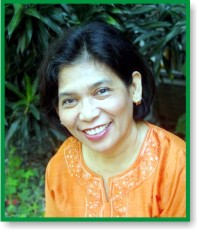 Marise Espineli from the Philippines is a capacity development professional working for the International Institute of Rural Reconstruction (IIRR) based in Cavite, Philippines. Marise has more than 20 years’ experience in designing and conducting workshops and training courses and providing technical assistance to development organisations on participatory management of projects, programmes and organisations. She has special interest in gender mainstreaming in projects and organisations and in participatory monitoring and evaluation (M&E). She has a Master’s degree in International and Intercultural Management from the School for International Training in Vermont, USA. She is now taking her PhD on Applied Cosmic Anthropology at the Asian Social Institute, Manila. She worked with the Aga Khan Foundation in Afghanistan as Director of its Programme for Professional Development for almost three years. She is currently the Director of the IIRR Regional Center for Asia. As member of the Prolinnova International Support Team, Marise provides support to developing and implementing its M&E system. She facilitated Prolinnova training courses in M&E and in facilitating participatory innovation development.
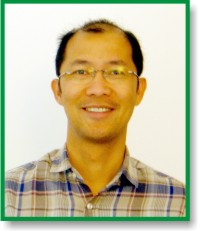
Oliver Oliveros from the Philippines holds a BSc degree in Human Ecology from the University of the Philippines, a Certificate of Management from John Cabot University in Rome, and a Masters (Acteurs et Nouvelles Territoires) from the Université de Montpellier 3. After working as Senior Economic Development specialist with the Ministry of Socio-Economic Planning in the Philippines, he became Associate Professional Officer with the FAO, working for five years in the Secretariat of the Global Forum for Agricultural Research (GFAR) in Rome as the contact person for Civil Society Organisations and the focal point for Rural Knowledge Systems and Innovation Processes. In 2004, he moved to Montpellier, France, as coordinator of the DURAS (Promotion of Sustainable Development in Agricultural Research Systems in the South) programme. Since 2008, he is Senior Officer for international relations, partnerships, grant coordination and M&E with Agropolis Foundation in Montpellier. He has been a staunch supporter of Prolinnova since his involvement in developing the concept for this initiative in Rambouillet, France, in 1999. He is currently coordinator of the Agroecology Coalition based in Rome.
Pratap Kumar Shrestha from Nepal holds a Master’s degree in agricultural economics from the University of East Anglia, UK, and a PhD in local knowledge and participatory technology development from the Bangor University, UK. He has more than 25 years of experiences in participatory research and development in the field of agriculture, biodiversity and natural resource management. He worked initially as a socio-economist and later as Head of the Planning, Monitoring and Evaluation Unit at Lumle Agricultural Research Centre in Nepal (funded by DFID, UK) from 1990-1998. He is a founder member of Local Initiatives for Biodiversity, Research and Development (LI-BIRD), a Nepal-based NGO, and headed the organisation as its Executive Director from 2003–09 before joining USC Canada Asia as Regional Representative and Scientific Advisor. He is currently the Program Specialist on Seed Systems and Plant Genetic Resources with SeedChange (formerly USC Canada). He was instrumental in establishing the Prolinnova Nepal programme and served as Country Programme Coordinator for five years. He served as co-chair of the POG.
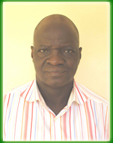 Samba Traoré from Mali has a PhD in Agronomy and an MSc in Crop Science. He has worked for over 30 years as specialist in millet and sorghum cropping systems at the Institute of Rural Economy in Mali. Before his studies, he was an agricultural advisor based in Mopti. In 1992–95 and 1999–2011, he headed the Malian millet research programme and was director of the Cinzana Agricultural Research Station in Ségou Region. In 1999–2010, he coordinated work of Syngenta Foundation for Sustainable Agriculture in improving livelihoods of smallholders in northern Mali. In 2010–12, he managed the EU/IFAD-funded Food Facility Program implemented by the International Crops Research Institute for the Semi-Arid Tropics (ICRISAT) in six West African countries. In 2015–16, he was the Mali Focal Point for the Integrated Seed Sector Development Program, which supported development of a market-oriented, pluralistic and dynamic seed sector in Africa and facilitated smallholders’ access to seed of superior varieties. In 2015–18, he coordinated McKnight Foundation’s project on dual-purpose sorghum and cowpea for crop–livestock integration. In all these positions, he developed strong partnerships with many agricultural research institutions, donors, NGOs and farmer organisations. Samba joined the Mali Platform in 2008 as a technical team member and is active in the PROFEIS (Promoting Local Innovation and Experimentation in the Sahel) and FaReNe (Farmer-led Research Networks) projects in facilitating PID, capacity building and lobbying. He is keenly interested in involving students in helping farmers evaluate their innovations.
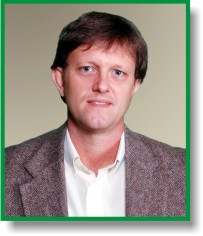 Scott Killough from the USA was, when elected to the POG, Associate Vice-President for Sustainable Agriculture and Rural Livelihoods of World Neighbors. He has more than 20 years’ experience in participatory development management in an NGO setting, and has field experience in programme development and management, agricultural extension education systems and sustainable agriculture practices in the tropics. From 1990 to 2006, Scott worked with IIRR in the Philippines, where he was involved in all aspects of institutional planning and management, programme development, M&E, oversight of community-based field projects, coordination of international workshops and training, publication and documentation, and numerous technical assistance assignments. These tasks were conducted in various countries mainly in Central America, South and Southeast Asia, and East Africa. In the early 1980s, Scott worked for three years in Guatemala in community-based livestock development and as technical trainer of para-veterinary technicians. He holds a BSc in Agricultural Economics and Political Science from Oklahoma State University, a Master’s degree in International Agriculture and Rural Development from Cornell University, and a PhD in International and Rural Development from the University of Reading, UK, with a dissertation focused on processes and impacts of farmer-to-farmer extension in Central America.
Sergio Larrea from Bolivia is an agronomist who graduated from the “Escuela Agrícola Panamericana” in Honduras in 1997, with a minor on rural development. In the last 13 years, he has been facilitating negotiation processes and management of conflicts related to natural resources. In 1998, he was part of a team documenting rural conflicts for a Honduran network (ANAFAE). From 1999 to 2003, he worked on strengthening indigenous peoples’ organisations in the Ecuadorian Amazon region and on facilitating a participatory natural resource management approach in protected areas in Ecuador. Between 2003 and 2008, he was the coordinator of the “Participatory Management System of the Galapagos Marine Reserve”. From 2008 to 2010, as coordinator of the work of the NGO World Neighbors in Bolivia, he focuses on programmes for agriculture and child nutrition in the north of Potosí. At present, he is based in Quito, Ecuador, and works as an advisor to the Andean programme for Food Sovereignty, financed by IIED (International Institute for Environment and Development), a programme being implemented in Bolivia, Peru and Ecuador.
Sonali Bisht from India is founder of INHERE (Institute for Himalayan Environmental Research and Education, www.inhereindia.in), a local NGO involved in community-based sustainable development in the central Himalayan region of India. She holds a Master’s degree in Political Studies and has worked with the public sector, media and development organisations. She is a development worker, writer and advocate of community-based natural resource management; community-based organic agriculture value chains; local food and nutrition security systems; women in agriculture; integrated farming system for smallholder development; women empowerment in governance; low-cost and affordable indigenous primary healthcare systems; pro-poor climate change adaptation and mitigation systems and strengthening community-based innovation, livelihoods and entrepreneurship. Sonali has worked with, advised and evaluated organisations at local, national and international level in her areas of expertise. She was NGO member of the Steering Committee of the Global Forum on Agricultural Research (www.egfar.org), a forum hosted by FAO to promote inclusive and development-oriented agricultural research focused on smallholders, and was in the working group on Enabling Environment of the Global Alliance on Climate Smart Agriculture and of the Agrobiodiversity community (ABC@D).
 Suman Shekhar Manandhar (sumanssm@gmail.com) holds a BSc in Agriculture (University of Agriculture, Faisalabad, Pakistan) and an MSc in Agricultural Economics (University of Sydney, Australia). He coordinated Prolinnova–Nepal for several years as staff member of the first host NGO Local Initiatives for Biodiversity Research and Development (LI-BIRD). He led the FAIR (Farmer Access to Innovation Resources) and LINEX-CCA (Local Innovation & Experimentation for Climate Change Adaptation) projects and was key organiser of the Farmer Innovation Fair (FIF) in Nepal in 2009, held back-to-back with the Innovation Asia Pacific Symposium, Prolinnova’s International Partners Workshop, a POG meeting and a FAIR partners meeting. Suman led the SDC (Swiss Agency for Development & Cooperation) homegarden development project in 20 districts in Nepal, focused on empowering women and marginalised farming communities. In 2015, he joined the UNDP Community Infrastructure & Livelihood Recovery Programme for post-earthquake and post-flood recovery in 15 districts of Nepal. Since 2018, he is National Project Manager in the Ministry of Land Management, Cooperatives & Poverty Alleviation’s Cooperative Market Development Programme, setting up a cooperative marketing network for small-scale producers of fruits and vegetables in six districts in Bagmati Province, Nepal. Suman has long been a committed member of the Prolinnova network and supports it as PID trainer on a pro-bono basis and as advisor to other CPs on organising FIFs. He served as co-chair of the POG.
 Susan Kaaria (s.kaaria@cifor-icraf.org) from Kenya was, when elected to the POG, Program Officer for Environment and Economic Development with the Eastern African office of Ford Foundation. She then became Senior Gender Officer with FAO in Rome. She has a PhD in Forest Resource Economics and Agricultural Economics. Prior to joining the Ford Foundation, Susan worked as scientist at the International Center for Tropical Agriculture (CIAT) in Latin America and Africa (Eastern and Southern) for 10 years. She conducted action research in community-based natural resource management; community-based participatory M&E systems, and innovative participatory approaches for increasing access to and benefits from markets by poor and marginalised communities, especially poor rural women. In 2008 she returned to Kenya to take up a position with Ford Foundation in Nairobi, where she worked on programmes to enhance rural livelihoods and sustainability. She co-organised the Innovation Africa Symposium in November 2006 in Uganda in partnership with Prolinnova and co-edited the book that came out of that symposium. She served as co-chair of the POG.
 TJ James (james.tj6@gmail.com) of India, an anthropologist, has worked on grassroots innovation for over two decades. He is Founder and Director of Creativiti Council in Kerala and Director of the Innovation – Science & Technology-based Entrepreneurship Development project of India’s Department of Science and Technology, implemented by Peermade Development Society for incubating local innovations. He has experience in scouting, documenting, developing, incubating, disseminating and commercialising local innovations and setting up innovation-based micro-enterprises, with the support of donors such as UNDP, FAO, National Science & Technology Entrepreneurship Development Board andNational Innovation Fund of the Government of India. He was team member in the USAID-supported South-to-South HIV/AIDS Resource Exchangeproject for sharing best practices between India and Africa. He was awarded the Chevening Scholarship in 2011 and nominated for a Fulbright Humphrey Fellowship in 2017. He coordinated the National Innovation Foundation Government of India (2005–07) and the Honey Bee Network in Kerala (2000–13) and was Senior Honorary Fellow of the Kerala Start-up Mission in Rural Innovation (2018–20).
TJ James (james.tj6@gmail.com), anthropologue indien, travaille sur l’innovation à la base depuis plus de deux décennies. Il est fondateur et directeur du Creativiti Council au Kerala et directeur du projet Innovation – Science & Technology-based Entrepreneurship Development du ministère indien des sciences et de la technologie, mis en œuvre par la Peermade Development Society pour l’incubation d’innovations locales. Il a de l’expérience dans le repérage, la documentation, le développement, l’incubation, la diffusion et la commercialisation d’innovations locales et la création de micro-entreprises basées sur l’innovation, avec le soutien de donateurs tels que le PNUD, la FAO, le National Science & Technology Entrepreneurship Development Board et le National Innovation Fund du gouvernement indien. Il a été membre de l’équipe du projet d’échange de ressources Sud-Sud sur le VIH/sida, soutenu par l’USAID, pour le partage des meilleures pratiques entre l’Inde et l’Afrique. Il a reçu la bourse Chevening en 2011 et a été nommé pour une bourse Fulbright Humphrey en 2017. Il a coordonné la Fondation nationale pour l’innovation du gouvernement indien (2005-07) et le réseau Honey Bee au Kerala (2000-13) et a été Senior Honorary Fellow de la Kerala Start-up Mission in Rural Innovation (2018-20).
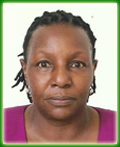 Violet Kirigua (violet.kirigua@kalro.org) holds an MSc and is now pursuing a PhD in Agribusiness. She is Senior Research Officer in the Crops Systems Unit of the Kenya Agricultural and Livestock Research Organization (KALRO), with responsibilities in research planning and management, acquisition and financial resource planning, monitoring and evaluation, communication and organisational marketing. She has been involved in designing and implementing various development and research projects and facilitated strategic planning processes for many national and regional organisations. She has provided tailor-made training on various technical and management aspects. She has written numerous research reports and papers and co-edited proceedings of many national, regional and international workshops and conferences, and has also published in refereed scientific journals. Violet has been a member of Prolinnova–Kenya since it started in 2007. She represents KALRO in the Prolinnova–Kenya National Steering Committee and represents Kenya in the Prolinnoval taskforce for ESA.
Violet Kirigua (violet.kirigua@kalro.org) est titulaire d’un MSc et poursuit actuellement un doctorat en agrobusiness. Elle est chargée de recherche principale au sein de l’unité des systèmes de culture de l’Organisation de recherche sur l’agriculture et l’élevage du Kenya (KALRO), avec des responsabilités en matière de planification et de gestion de la recherche, d’acquisition et de planification des ressources financières, de suivi et d’évaluation, de communication et de marketing organisationnel. Elle a participé à la conception et à la mise en œuvre de divers projets de développement et de recherche et a facilité les processus de planification stratégique pour de nombreuses organisations nationales et régionales. Elle a dispensé des formations sur mesure sur divers aspects techniques et de gestion. Elle a rédigé de nombreux rapports et articles de recherche et coédité les actes de nombreux ateliers et conférences nationaux, régionaux et internationaux, et a également publié dans des revues scientifiques à comité de lecture. Violet est membre de Prolinnova-Kenya depuis sa création en 2007. Elle représente KALRO au sein du Comité National de Pilotage de Prolinnova-Kenya et représente le Kenya au sein du taskforce de Prolinnova pour l’AOA.
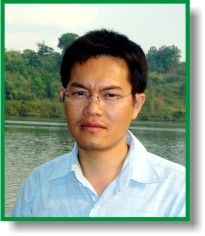 Vitou Sam from Cambodia holds a BSc in Forestry from the Royal University of Agriculture, Phnom Penh, Cambodia, and an MSc in Agriculture and Biology from the Université Catholique de Louvain, Belgium. He works with CEDAC (Centre d’Etude et de Développement Agricole Cambodgien / Cambodian Centre for Study and Development in Agriculture) for over 10 years. He is was overall coordinator of the Prolinnova–Cambodia network and Director of CEDAC Institute for Local Development (CILD), a CEDAC department that mainly provides capacity building to youth, farmer promoters and farmer leaders in participatory approaches, agriculture and rural development. He is involved in teaching, training and project development/ management in the areas of sustainable agriculture, participatory M&E and participatory innovation development (PID). As coordinator of Prolinnova–Cambodia, he facilitates multistakeholder platform building and institutionalisation of participatory approaches into agricultural research and development. He also works on integrating PID into institutions of higher education in agriculture and rural development.